Case Study
Wolf Pine Website
A tree surgeon working across Cornwall, with no website and a phone full of his own footage. This is what he got.
01
The brief
Wolf Pine is one person. Noah quotes the job, climbs the tree and does the work, across Cornwall from a base in Hayle. He had a brand, his own photography and no website at all.
Tree surgery is bought by people with a problem and a bit of worry: a tree too close to a house, a branch over a neighbour's roof, a storm coming. The site had to answer the practical questions quickly, look like someone who does careful work, and turn a worried browser into a phone call. It also had to be found by people searching for a tree surgeon in the towns he actually covers.
I designed and built it, wrote it with him, and set up the local search work behind it. It was the first Picsel build, so its shared parts became the template every later site started from.
- Role: Designer and developer — design, build, copy, photography direction, local search
- Deliverables: 21-page website, enquiry system, six town pages, Google profile work, ongoing care
02
Design
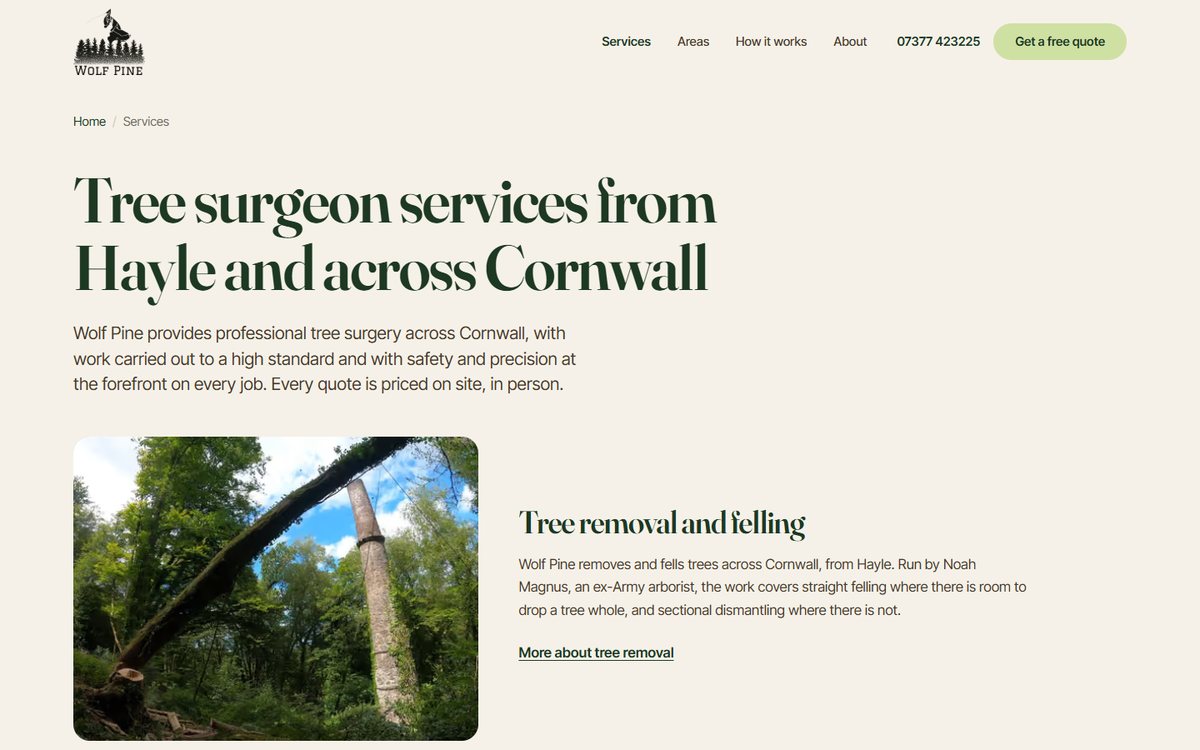
The palette came off his own logo: forest green and near-black on a warm off-white, with one green for buttons and links. Fraunces sets the headings and Inter Tight the body, so the pages read like something written by a person rather than generated by a page builder.
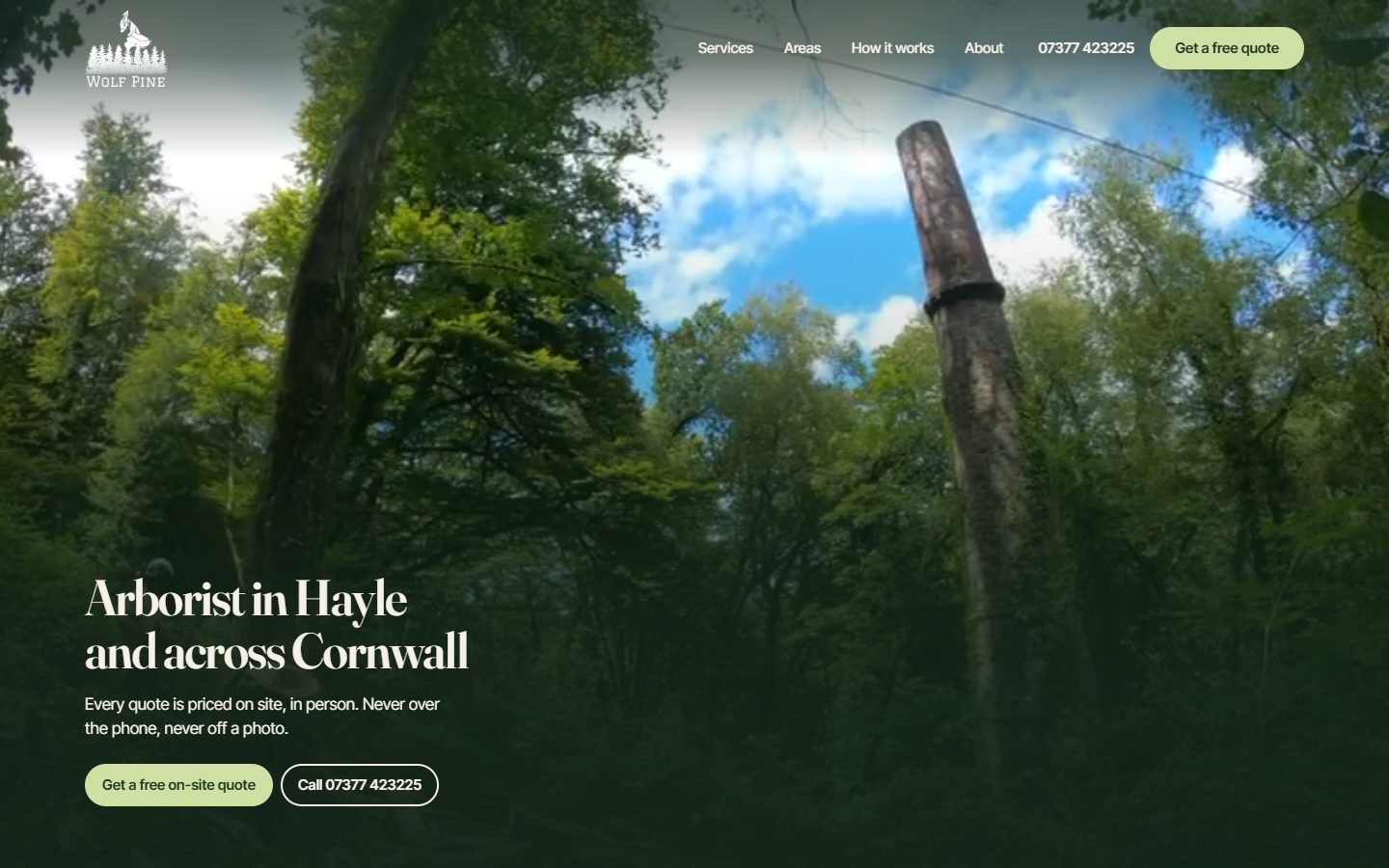
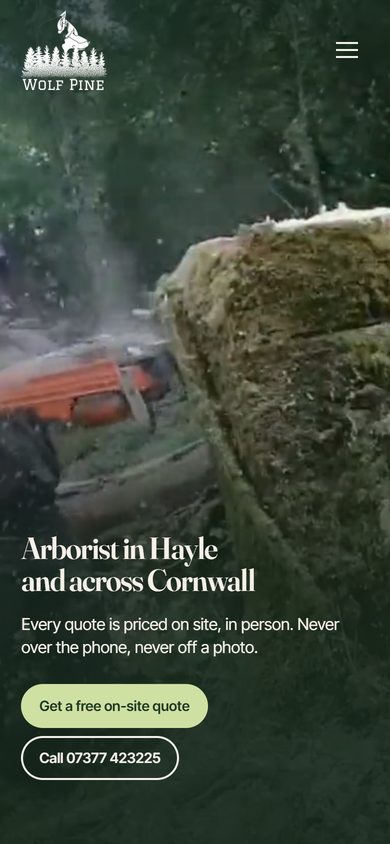
Every photograph and clip on the site is his. No stock. A stock arborist in a stock harness tells a customer nothing; a photograph of the trunk he cut last week tells them exactly what they are buying. The hero on the phone was rebuilt from his own reel for the same reason.
03
The one thing worth a page of its own
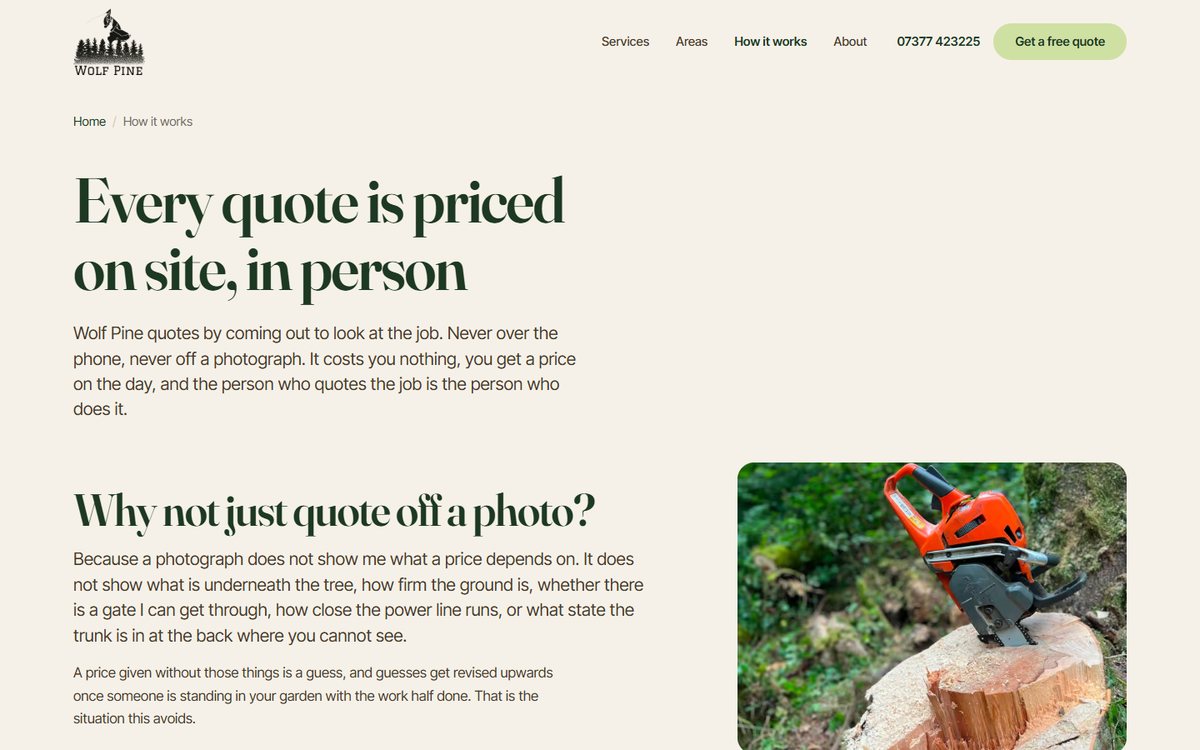
On the discovery call Noah said the thing that turned out to be the whole site: every quote is priced on site, in person. Never over the phone, never off a photograph.
That is a real difference from how much of the trade quotes, and it answers the fear behind hiring a tree surgeon, which is that the price will climb once the work starts. So it got its own page, in his words, laid out as the five steps a customer actually goes through — including the one where they take their time and compare him against someone else.
One idea, said plainly, on the home page, the service pages and the contact page. It is the line customers repeat back to him.
04
Getting found in the towns he works in
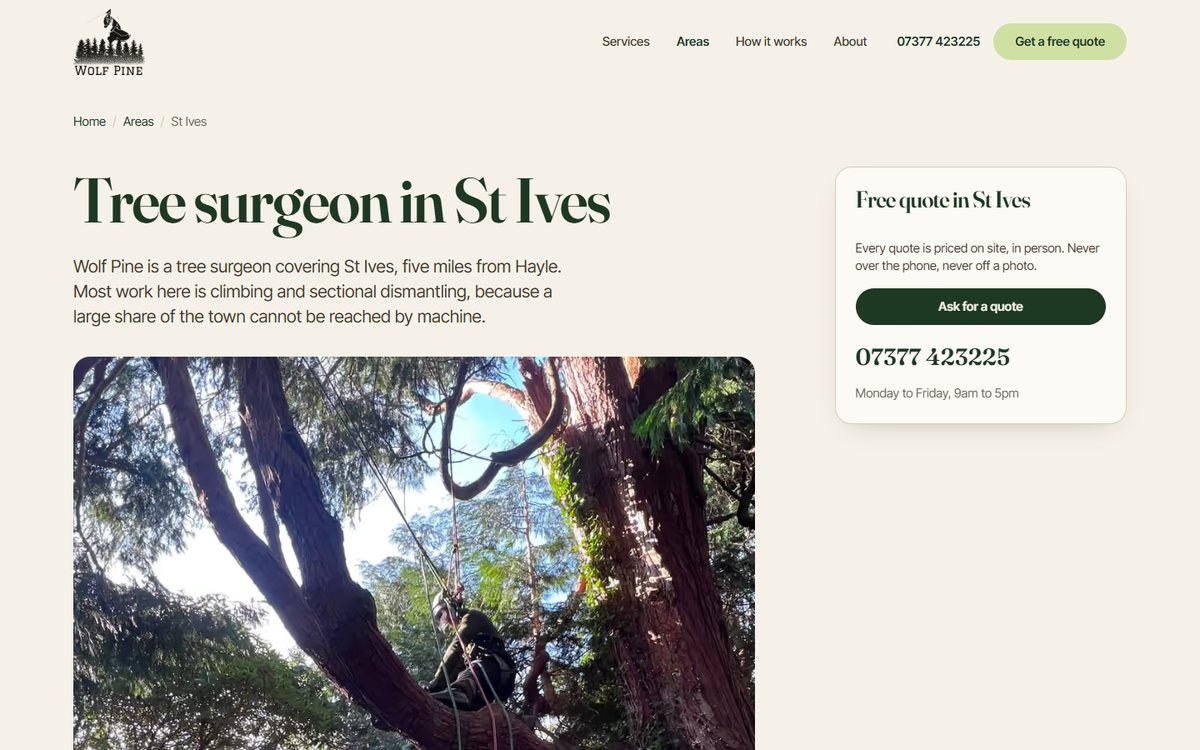
Someone with a dangerous tree searches for their own town, not for a county. So the site has a page for each of the six towns he works in most, built from one template: same frame, same contact section, same structured data, different local content. Add a town and it gets a page, a sitemap entry and its own schema in a single change.
A town page that says nothing specific is just the home page with a place name swapped in, and it reads that way. Each of these says what tree work in that town is actually like: which streets cannot be reached by machine, which trees grow salt-burnt facing the bay, where conservation area rules catch people out.
Every one of those local claims was checked page by page before launch, down to the six-week notice a protected tree needs. One turned out to be wrong and was cut rather than softened.
05
Enquiries
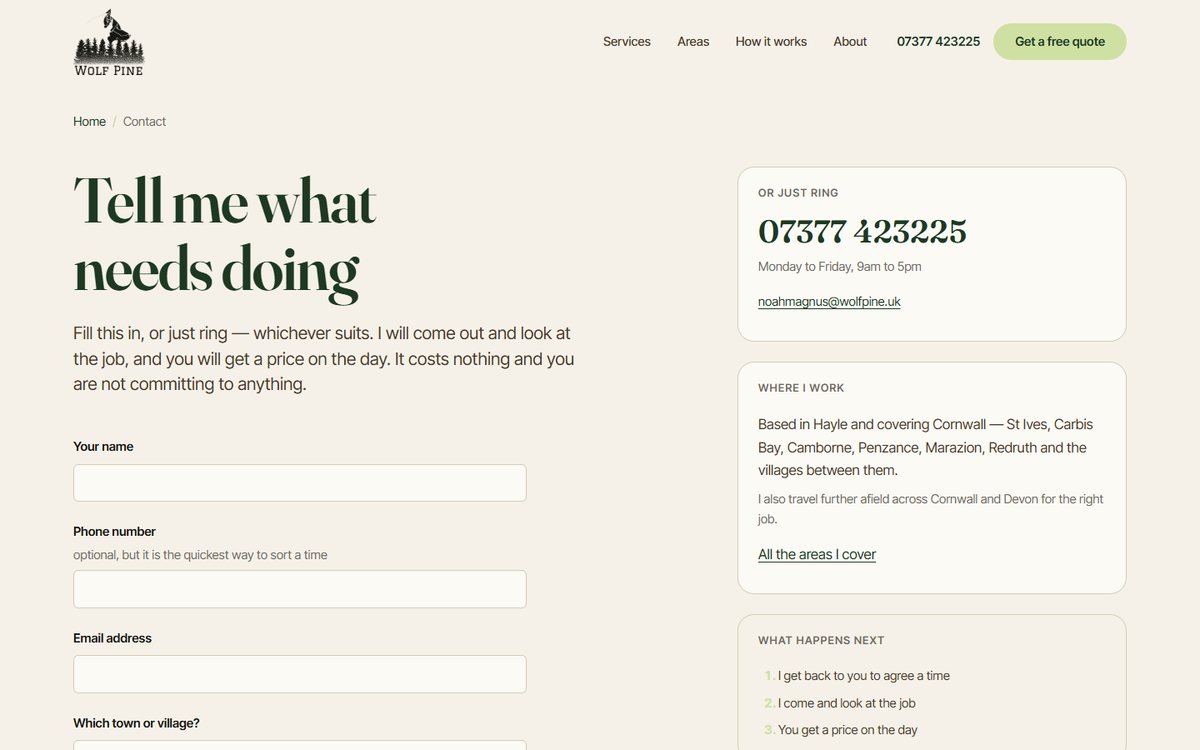
The contact form asks four things and lets you attach a photo of the job. The photo is not what the price comes from, but it tells him whether he is looking at an afternoon or two days, and it means a customer who cannot describe a tree can just show him one.
The site sends its own mail rather than renting a third-party form service, so an enquiry lands in his inbox within seconds of the button being pressed. That meant moving the site onto Cloudflare Workers partway through the build: a day's work, and one fewer dependency he pays for forever.
06
Nothing on it that cannot be backed up
Trade websites are full of claims nobody checks. This one was written the other way round: a claim went on the page only once there was something behind it, and anything still waiting on paperwork stayed off until the paperwork arrived.
The same rule shaped the reviews. His Google reviews are real and quoted with a first name, and because not one of them says which town the job was in, no review is positioned under a town heading where the layout would imply something the review does not say.
It is a slower way to write a website and a much easier one to defend, which matters in a trade where the customer is deciding whether to trust a stranger with a chainsaw.
Outcome
Wolf Pine went live in August 2026 with 21 pages and its own enquiry system. His Google profile already existed, so that work was consistency rather than setup: the business name, the phone number and the facts now read the same on the site, in its structured data and on the profile. The site is on a care plan, so the domain, the uptime and the details are checked on a schedule rather than the day something breaks.
It was also the first Picsel build, which makes it the site every later one is measured against. Read the Picsel case study for the studio behind it.